AI is increasingly shaping the practices, outreach, and administration of evangelical churches. The other day at the church office we were discussing a new church management system that will eventually be replacing our current system. At this time I offered the surprising statement:
“If I had my way, I would like to go back to the days when we weren’t dependent on any kind of computer technology and I say this as someone with a computer science degree”.
I went on to lament how computers and today’s Artificial Intelligence (AI) technology are rapidly encroaching on church fellowship and our dependency on God’s Word and the power and wisdom of the Holy Spirit. Many are addicted to AI without even realizing it. As an example, I shared how people create text messages and, as they type, the AI suggests words and phrases to use in the text message. The sender of the text selects words that are suggested by the AI without even thinking about it. Over time, we lose our ability to ponder for the right words to express our thoughts and feelings. We lose the will to pray for wisdom, insight, and direction for what to communicate as we are handed everything on an “AI platter”.
We are losing the opportunity and ability to “speak to one another with psalms, hymns, and spiritual songs, singing and making melody with your heart to the Lord” (Ephesians 5:19; Colossians 3:16). As I was writing this article, I performed a Google search to find the exact chapter and verse of the aforementioned Scriptures. Rather than present me with “search results”, Google gives me the “AI Overview” for the query. The AI also answers questions I did not ask, and proceeds to lead me down a Bible study path and thoughts for consideration that I didn’t request. Isn’t that the ministry of the Holy Spirit? (John 16:13).
I do think that AI is very useful as an information retrieval or research tool. I’ve been using computers for years in my research to search databases of information on a myriad of topics. But AI is more than a database; it is a form of intelligence. In fact, there are some AI engineers who will argue that Artificial Intelligence is on its way to being sentient, meaning that one day it will have consciousness, self-awareness, and emotions. In other words, it will think and feel like a human. There have been reports that some AI systems have developed a “self-protection mode” meaning they have developed feature that allows it to actively monitor its own operations and detect potential threats or malicious manipulations, taking defensive actions to safeguard its functionality and prevent unauthorized access or data corruption; essentially, the AI system has “evolved” a way to protect itself from attacks or misuse by automatically identifying and mitigating suspicious activity.[1]
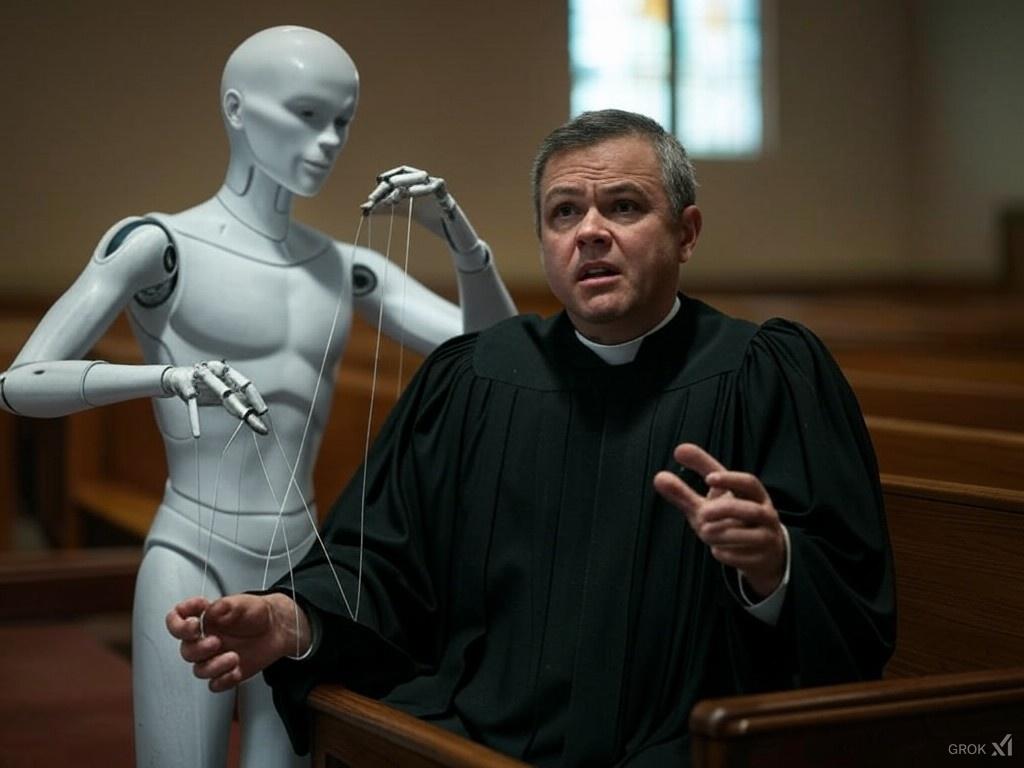
AI is more than a computer app like Microsoft Word or Excel, it is a system that has already infiltrated the church and ministry and body life. AI is telling people how to think. It is creating a worldview in the minds of people that may be antithetical to Scripture. AI is guiding people when it comes to our decision-making, planning and information-seeking. One report says that “AI is a dynamic catalyst that profoundly influences the human mind, fundamentally altering our cognitive processes and revolutionizing our thinking patterns and information absorption.” Another report says that “AI can influence a person’s mental health in several ways, both positively and negatively, by impacting their social interactions, information consumption, and overall sense of well-being through personalized content curation, potential for social isolation, and the creation of echo chambers, which can lead to feelings of anxiety, depression, and loneliness”. AI can also significantly influence a person’s shopping habits by analyzing past purchase history, browsing behavior, and other data to provide personalized product recommendations, targeted advertising, dynamic pricing, and even virtual assistance, ultimately leading to more targeted and potentially impulsive buying decisions based on individual preferences and predicted needs.
Needless to say, Artificial Intelligence has infiltrated the church and is heavily influence how people relate to God and to each other. Here are some key areas where this influence is most evident:
AI in Ministry and Outreach
Chatbots for Pastoral Care and Counseling: Churches are using AI-powered chatbots to provide spiritual guidance, answer theological questions, and offer 24/7 pastoral support. There are examples of AI chatbots that have been integrated into church websites to handle frequently asked spiritual questions.
Virtual Evangelism: AI tools analyze social media behavior to help churches target online ads and messages to individuals most receptive to religious outreach. AI-driven algorithms on platforms like Facebook or YouTube can suggest sermons or religious content.
Sermon Assistance: Pastors have begun to use AI tools to generate sermon outlines, suggest Bible verses, or summarize complex theological texts. Tools like ChatGPT or Grok on X can provide sermon drafts, or Bible apps can generate verse themes.
AI in Worship and Church Services
Automated Worship Planning: AI platforms assist worship leaders by selecting songs based on sermon themes, church traditions, or audience preferences. Software apps like The Planning Center integrate AI tools for scheduling and content selection.
Live Translation and Subtitles: AI-powered tools provide real-time translations and subtitles for services, enabling multicultural congregations to participate fully. Tools like DeepL Translator or Otter.ai assist with live service translations.
AI-Generated Media Content: Churches use AI to create visual presentations, social media graphics, videos, and video edits for sermons and promotions. Canva AI generates media content tailored to sermon themes.
AI in Bible Study and Theological Research
AI-Powered Bible Study Tools: AI applications like Logos Bible Software or Bible Gateway AI tools help with deep scriptural analysis, cross-referencing, and commentary research.
Personalized Devotionals: AI creates customized devotional plans based on a user’s reading history, spiritual needs, or emotional state. Apps like YouVersion use AI to recommend daily Bible verses and devotionals.
Let me pause here long enough for you to consider the spiritual implications of AI doing the “deep scriptural analysis” and “recommending daily Bible verses and devotionals”.
Where is the ministry of the Holy Spirit at this point?
AI Apologetics Tools: AI assists in answering difficult theological questions or defending faith-based arguments in real time. AI tools can offer quick answers to skeptics’ questions online.
AI in Church Administration and Management
Attendance Prediction and Analysis: AI analyzes attendance patterns, tithing trends, and community engagement data to predict future attendance and optimize resources.
Donation and Fundraising Tools: AI platforms improve donation strategies by analyzing giver behavior and suggesting optimal fundraising campaigns. Churches use AI-based financial platforms like Tithe.ly or Pushpay.
Volunteer and Staff Scheduling: AI tools help schedule volunteers, predict staffing needs, and streamline church event planning.
AI in Missionary Work
Language Translation: AI tools enable missionaries to communicate in foreign languages effectively. AI-powered translators bridge communication barriers in remote regions.
Risk Assessment for Missionaries: AI systems analyze geopolitical data to predict risks in missionary regions, ensuring safer missions. Think about it. In the first century, Paul and the other missionaries did not depend on statistics and “geopolitical data” to guide their mission trips, they were in complete dependence of the Holy Spirit. In Acts 16:6-7 the Bible says, “They passed through the Phrygian and Galatian region, having been forbidden by the Holy Spirit to speak the word in Asia; and after they came to Mysia, they were trying to go into Bithynia, and the Spirit of Jesus did not permit them”.
Digital Discipleship: AI platforms allow missionaries to disciple new believers remotely through automated follow-ups and personalized Bible study materials.
Ethical and Theological Discussions About AI
Theological Reflection on AI Ethics: Evangelical scholars are actively debating topics such as:
- Does AI have a moral standing?
- Is it ethical to use AI for spiritual counseling?
- Can AI “preach” or “pray”?
Discernment in AI Use: Many evangelical leaders emphasize using AI as a tool, not a replacement for human relationships, spiritual discernment, or pastoral care.
Challenges and Concerns
Loss of Human Connection: Over-reliance on AI risks depersonalizing ministry and reducing meaningful human connections.
Theological Accuracy: AI-generated sermons or teachings might lack spiritual depth or doctrinal soundness.
Privacy Concerns: AI tools handling church member data must prioritize data privacy and security.
Another topic we need to consider is how might the aforementioned influences of Artificial Intelligence replace the ministry of the Holy Spirit in the life of the believer individually, and the fellowship of believers collectively.
How AI Might Undermine or Replace the Ministry of the Holy Spirit in the Church
Artificial Intelligence (AI) offers significant tools for ministry, but its overuse or misuse can subtly—or even overtly—begin to replace the reliance on the Holy Spirit in both individual believers’ lives and the collective fellowship of believers in the church. Below are key areas of concern:
Replacing Spiritual Discernment with Algorithmic Recommendations
AI in Personal Devotions: Personalized AI devotionals might offer algorithmically tailored content based on reading habits or emotional states. Believers might start trusting AI algorithms more than the leading of the Holy Spirit when choosing Scripture, meditating on God’s Word, or understanding spiritual lessons.
Spiritual Counseling via AI Chatbots: AI tools offering emotional support or spiritual advice may provide quick, surface-level answers.Believers might bypass prayer, waiting on God, and seeking wisdom from spiritually mature believers, instead relying on AI for instant advice (Titus 2:1-7).
Spiritual Impact: The Holy Spirit is personal and relational, speaking uniquely to each believer’s heart through the Word of God. AI, by its nature, can only mimic this through pre-programmed responses and data analysis. These pre-programmed responses are, more often than not, the result of a data set compiled from internet resources issuing from materials authored by both believers and unbelievers and will undoubtedly include heretical teachings.
Shifting Dependency from Prayer to Predictive Analytics
Data-Driven Decision Making in Churches: AI tools predict attendance patterns, financial trends, and outreach success rates.Churches might begin to rely more on data-driven strategies than on prayerful discernment and Holy Spirit, Scripturally-led guidance for decisions.
Event Planning and Outreach Campaigns: AI suggests optimal times for events or audiences for outreach campaigns based on algorithms.Churches might prioritize AI efficiency metrics over spiritual readiness or Holy Spirit-inspired timing.
Spiritual Impact: While data can be useful, the Holy Spirit operates beyond metrics, often leading believers to actions that defy logical analysis (e.g., Philip being directed to the Ethiopian eunuch in Acts 8).
AI-Generated Sermons and Teachings
AI-Assisted Sermon Preparation: Preachers may use AI tools to generate sermon outlines, illustrations, and theological insights.Preachers might unintentionally replace prayerful study and Spirit-led illumination with polished, algorithmically generated content.
Replacing Spirit-Led Preaching with AI Suggestions: AI tools can tailor sermons to audience preferences rather than delivering Holy Spirit-convicted and messages that build up believers.Messages could become more entertaining and popular rather than convicting, admonishing, and edifying (2 Timothy 4:1-5).
Spiritual Impact: True spiritual transformation occurs when the Word is preached with power from the Holy Spirit (1 Corinthians 2:4-5), not merely delivered eloquently.
Over-Reliance on Virtual Community over Genuine Fellowship
AI-Managed Online Church Platforms: AI tools moderate discussions, suggest prayer partners, and recommend sermon content.Believers might feel they are engaging in spiritual fellowship, but it could remain shallow and transactional rather than Spirit-controlled and relational (Ephesians 5:19; Colossians 3:16).
Virtual Church Attendance as a Substitute for Physical Presence: AI tools make online worship seamless, but they cannot replicate face-to-face fellowship or Spirit-led community prayer.
Spiritual Impact: The Holy Spirit ministers as believers gather together and practice the “one anothers” of Scripture (Matthew 18:20; Acts 2:42). Purely digital interactions may lack the relational depth and shared spiritual experiences necessary for true fellowship.
Loss of Spiritual Intimacy in Prayer and Worship
AI in Worship Planning: AI selects worship songs based on algorithms and theme matching.Worship leaders might depend on AI-generated setlists rather than sensitivity to the Spirit’s leading during worship.
Automated Prayer Tools: AI apps generate prayers or remind believers to pray at set times.Prayer might become a routine task guided by AI prompts instead of Spirit-led communion with and a love for God.
Spiritual Impact: Worship and prayer are deeply relational acts, guided by the Holy Spirit’s prompting (Romans 8:26). AI cannot replicate this intimacy that occurs among God’s elect.
Ethical and Moral Dilution
AI in Theological Interpretation: AI tools interpret Scripture based on pre-programmed biases or mainstream consensus. The risk is that AI might filter out hard truths of Scripture or controversial doctrines, watering down any exposition and eisegesis of Scripture attempted by the preacher.
Moral Guidance from AI: AI chatbots might provide general ethical advice but lack spiritual wisdom and moral conviction rooted in Scripture.Believers might sidestep and lose dependency on the ministry of the Holy Spirit.
Spiritual Impact: The Holy Spirit convicts hearts of sin, righteousness, and judgment(John 16:8). AI cannot reproduce this regenerative work of God in the heart of the sinner.
Diminished Faith in the Supernatural
Human-Centric Problem-Solving: AI emphasizes human solutions and logical strategies, often reducing reliance on God’s supernatural intervention.Faith might become more about human effort enhanced by AI tools than about trusting God’s power and timing.
Spiritual Impact: The Holy Spirit empowers believers to live by faith, not sight (2 Corinthians 5:7). AI might subtly shift reliance from God to human systems.
How to Safeguard the Church Against These Risks
- AI as a Tool, Not a Substitute: Use AI as a ministry tool, not as a replacement for the work of the Holy Spirit and the disciplined study commanded of the pastor who is responsible for “studying” the Scriptures (2 Timothy 2:15).
- Maintain Accountability: Ensure AI use aligns with what the Bible teaches. Check the source for the content the AI returns from your prompts. The Bereans were more open-minded than the people of Thessalonica, and they listened eagerly to Paul’s message. They searched the Scriptures day after day to see if Paul and Silas were teaching the truth (Acts 17:11-12).
- Prioritize Prayer and Discernment: Every decision, even those informed by AI data must be compared with the Scriptures and the wisdom provided by God as you take the proposed decision to Him in prayer (Joshua 9:14).
- Preserve Authentic Fellowship: Use AI to support fellowship practices, not replace genuine spiritual community and intimacy (Acts 2:42; 1 Corinthians 12; Ephesians 4:3).
- Stay Theologically Anchored: Regularly evaluate AI-generated content for doctrinal soundness and spiritual integrity. Regularly investigate the source material from which the AI content was derived.
Final Thought
AI can be a powerful tool for the Church, but it must remain a servant, not a master. The ministry of the Holy Spirit is irreplaceable—it is personal, relational, convicting, and transformative in ways no algorithm can replicate.
[1] https://www.forbes.com/sites/emilsayegh/2024/12/17/the-rise-of-unpredictable-ai-will-ai-test-human-control-in-2025/

 Bible Points
Leave a comment